
Reformer vs Mat Pilates: What's the Difference?
By Nasreen Alexandra Davison, APPI-qualified Pilates Instructor · 1 September 2026
Quick answer
Reformer Pilates uses a spring-loaded machine (the "reformer") to add adjustable resistance and support to each movement. Mat Pilates uses only your body weight, gravity, and small equipment like resistance bands or a Pilates ring, performed on a floor mat. Both build core strength, posture, and control. They just get you there through different tools.
If you're searching for Pilates in Grantham and trying to decide which to start with, this guide breaks down the real differences so you can choose with confidence.
What is Mat Pilates?
Mat Pilates is Pilates performed on a floor mat, using body weight as resistance, sometimes with small equipment like a resistance band, Pilates ring, or light hand weights. It focuses on controlled, precise movement, breath coordination, and building the deep core and postural muscles.
Because it needs no specialist machinery, Mat Pilates is accessible, portable, and a good foundation for understanding Pilates principles (alignment, breath, and control) before or alongside Reformer work.
What is Reformer Pilates?
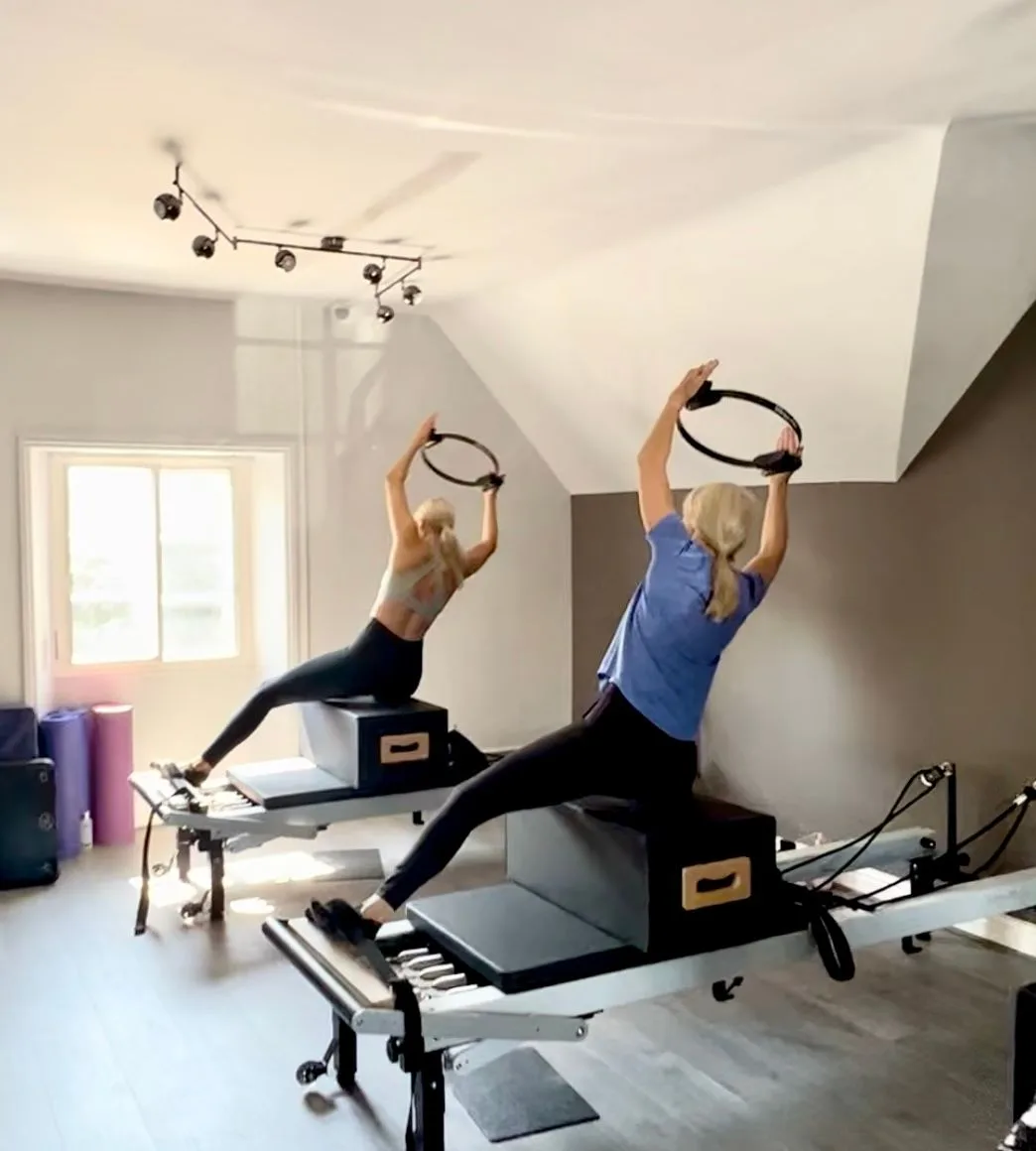
Reformer Pilates is Pilates performed on a reformer: a sliding carriage attached to a frame by a set of springs, which can be adjusted to add or reduce resistance. Instead of relying purely on body weight, the springs provide support in some movements and resistance in others.
This makes it possible to fine-tune intensity precisely for each person and each exercise, which is one reason Reformer Pilates is widely used in clinical and rehabilitation settings, not just fitness studios. The Chartered Society of Physiotherapy notes that many of its members use Pilates as part of rehabilitation programmes for exactly this reason. At our Grantham clinic, sessions use Align Pilates equipment, taught by an APPI-qualified instructor.
Key differences at a glance
| Mat Pilates | Reformer Pilates | |
|---|---|---|
| Equipment | Mat, optional small props | Reformer machine with adjustable springs |
| Resistance | Body weight only | Adjustable spring resistance |
| Support for beginners | Relies on body awareness | Machine can assist and guide movement |
| Typical cost | Lower | Higher (equipment/studio cost) |
| Best for | Building foundational control, portability | Targeted strength work, rehab, precise progression |
Which is better for beginners?
Both work well for complete beginners. The deciding factor is usually personal preference and teaching style, not the equipment itself. Some beginners prefer Mat Pilates because it feels simpler and more familiar. Others prefer Reformer Pilates because the machine provides a frame of reference and support that can make movements feel more achievable from the first class.
What matters most for beginners is qualified instruction. An APPI-qualified instructor will adapt either format to your current ability, so complete beginners are welcome at either.
Which is better for injury recovery or back pain?
Reformer Pilates is often favoured in clinical and rehabilitation settings because the spring resistance can be precisely adjusted, reduced to support a weak or recovering area, or increased gradually as strength returns. This graduated approach is why Reformer Pilates is commonly used in physiotherapy-informed exercise programmes.
That said, Mat Pilates also has real rehabilitation value, particularly for building the deep core control that supports the spine. The right choice depends on your specific condition, so if you're recovering from injury or managing ongoing back pain, it's worth discussing your history with a qualified instructor first rather than choosing based on the format alone. We cover this in more detail in Pilates for Lower Back Pain in Grantham.
This is general information, not medical advice. If you have a specific injury or diagnosed condition, check with your GP or physiotherapist before starting a new exercise programme.
Cost comparison
At Keystone Sports Therapy in Grantham:
- Mat Pilates: priced as part of our class schedule; see current pricing on the Pilates Grantham page.
- Reformer Pilates group classes: from £20 per session, with an 8-session pass at £150.
- Reformer Pilates 1:1 sessions: from £65 per 60-minute session, with package discounts (5 sessions: £310, 10 sessions: £600).
- Reformer Pilates duet sessions: a £10 levy per session on top of the standard rate, ideal for training with a partner.
Full details and booking are on the Pilates Grantham page.
Can you do both?
Yes, and many people do. A common approach is to build core awareness and technique in Mat Pilates, then use Reformer Pilates to add resistance-based progression, or vice versa. If you're not sure where to start, our instructor can recommend a mix based on your goals during your first session.
Frequently asked questions
Is Reformer Pilates better than Mat Pilates?
Neither is objectively better. They build the same core principles through different tools. Reformer Pilates uses spring-loaded resistance for adjustable intensity and support, while Mat Pilates uses body weight alone. Many people do both.
Which is better for beginners, Reformer or Mat Pilates?
Both are suitable for beginners when taught by a qualified instructor. Reformer Pilates can feel more supportive for some people because the machine assists and guides movement, while Mat Pilates relies more on body awareness from the start.
Is Reformer Pilates more expensive than Mat Pilates?
Generally yes, because Reformer Pilates requires specialist equipment. At Keystone Sports Therapy in Grantham, group Reformer classes start from £20 per session, with an 8-session pass at £150, and private 1:1 Reformer sessions from £65 per hour.
Can I do Reformer and Mat Pilates together?
Yes. Many clients combine both: Mat Pilates to reinforce body control and core awareness, and Reformer Pilates to add resistance and variety. An instructor can advise on a mix based on your goals.
Ready to try Pilates in Grantham? Book a class or learn more about our Reformer and Mat Pilates classes at our Castlegate clinic, taught by APPI-qualified instructor Nasreen Alexandra Davison.